

Currently Empty: 0 CFA
Velma Fonyuy — Smart Living
Sustainable Development: 4 ways of building a better future for the next generation.
Introduction
The future of every nation depends on the decisions people make today. Around the world, millions continue to face serious challenges such as poverty, unemployment, poor healthcare, environmental pollution, climate change, and limited access to quality education. These problems not only affect present generations but also threaten the future of young people who will inherit the world tomorrow.
As these challenges continue to grow, the need for sustainable development becomes more important than ever. Sustainable development is the process of improving human life today without destroying the opportunities and resources future generations will need. It is a balanced approach that promotes economic growth, environmental protection, and social well-being at the same time.
In simple terms, sustainable development is about building progress that lasts.
It encourages individuals, communities, businesses, and governments to make responsible choices that create long-term benefits for both people and the planet. Instead of focusing only on short-term success, sustainable development promotes solutions that protect the future while improving lives in the present.
Why Sustainable Development Matters
The world’s natural resources are limited. Clean water, fertile land, forests, and fresh air are essential for human survival, yet many of these resources are being damaged through pollution, deforestation, overconsumption, and irresponsible human activities.
Climate change has also become one of the greatest global threats of our time. Rising temperatures, floods, droughts, and environmental disasters continue to affect economies, communities, and livelihoods across the world.
Without sustainable development:
- Poverty may continue to increase
- Environmental destruction may worsen
- Unemployment may rise
- Future generations may struggle to survive in unhealthy environments
Sustainable development provides a pathway toward a healthier, safer, and more stable future. It reminds society that development should not only benefit the present generation but should also preserve opportunities for generations yet unborn.
The Powerful Role of Youth in Sustainable Development
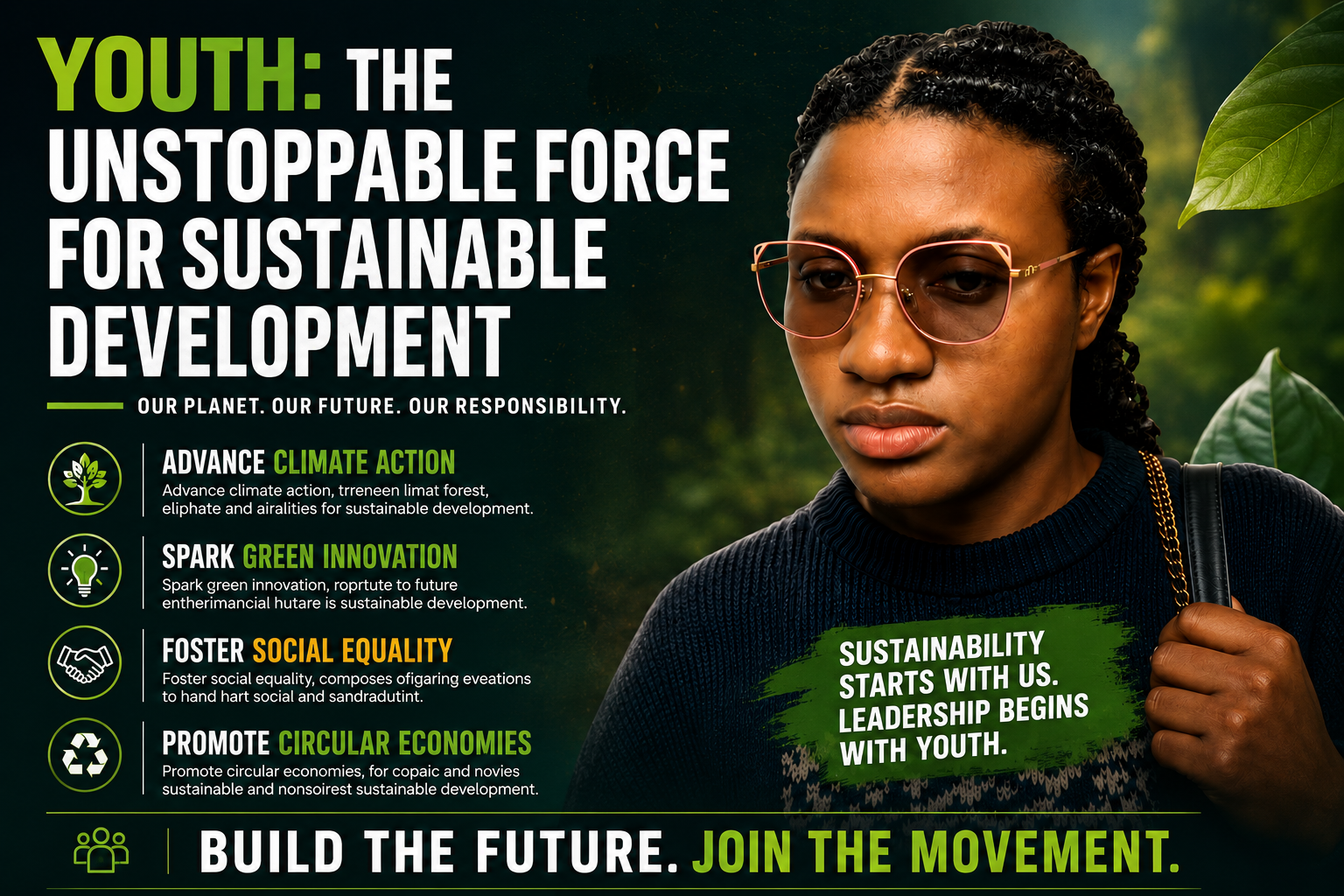
Young people are among the greatest drivers of sustainable change. They possess creativity, innovation, energy, and fresh perspectives capable of transforming society.
Across the world today, many young people are already making positive impacts by:
- Organizing environmental campaigns
- Promoting recycling and cleanliness
- Creating sustainable businesses
- Using technology and social media for awareness
- Supporting community development projects
Youth are not just the leaders of tomorrow; they are active contributors today.
When young people are empowered through education, mentorship, and opportunities, they become powerful agents of change capable of building stronger communities and sustainable societies.
Education: The Foundation of a Sustainable Future
Education remains one of the strongest tools for sustainable development. It equips people with the knowledge, skills, and mindset needed to solve problems and improve society.
A quality education promotes:
- Critical thinking
- Leadership
- Innovation
- Responsibility
- Problem-solving skills
Educated individuals are more likely to make informed decisions, create opportunities, reduce poverty, and contribute positively to their communities.
Schools and learning institutions also play an important role in teaching environmental awareness, financial responsibility, healthy living, and community service. Through education, people learn how to protect resources, support economic growth, and create lasting solutions to societal problems.
Simply put, education empowers people to build a better future.
4 Powerful Ways to Build a Better Future Through Sustainable Development
1. Protect the Environment
Environmental protection is one of the most important pillars of sustainable development. Human survival depends heavily on healthy ecosystems and natural resources.
Simple actions such as:
- Planting trees
- Recycling waste
- Avoiding littering
- Conserving water
- Reducing pollution
can create significant long-term benefits for society.
Communities that protect their environment often experience cleaner surroundings, healthier lifestyles, and stronger economic stability.
Protecting nature today helps secure life for future generations.
2. Support Education and Skill Development
Education creates opportunities and transforms lives. Supporting access to quality education and practical skills training helps reduce unemployment, poverty, and inequality.
Young people who gain valuable skills become more capable of:
- Starting businesses
- Creating jobs
- Solving community problems
- Contributing to national development
Investment in education is ultimately an investment in the future of society.
3. Use Resources Wisely
Responsible consumption is essential for sustainability. Many valuable resources are wasted daily through careless habits and overconsumption.
People should learn to:
- Avoid wasting food
- Save electricity and water
- Reuse and recycle materials
- Consume only what is necessary
Wise use of resources helps reduce environmental damage and ensures that future generations will also benefit from those resources.
Sustainability begins with responsible daily choices.
4. Strengthen and Support Communities
Strong communities create strong nations. Sustainable development grows when people work together to improve the lives of others.
Individuals can contribute by:
- Supporting local businesses
- Volunteering in community projects
- Helping vulnerable groups
- Participating in development initiatives
Even small efforts can create lasting positive change when communities unite around a common purpose.
Challenges Facing Sustainable Development
Despite its importance, sustainable development continues to face many obstacles across the world. Poverty, corruption, weak leadership, unemployment, poor infrastructure, and lack of education remain major barriers to progress.
In many communities, people struggle to meet basic needs, making long-term sustainability difficult to prioritize. Environmental destruction and weak government policies also slow development efforts.
However, these challenges are not impossible to overcome.
Through:
- Responsible leadership
- Public awareness
- Quality education
- Innovation
- Cooperation
societies can gradually build more sustainable systems that benefit everyone.
Conclusion
Sustainable development is more than an idea; it is a responsibility shared by individuals, communities, governments, and future leaders.
It is about creating a world where people can live healthy, peaceful, productive, and successful lives both now and in the future. It promotes wise decision-making, environmental responsibility, social progress, and economic growth that benefits everyone.
The future of the next generation depends greatly on the actions taken today.
By protecting the environment, supporting education, using resources wisely, and strengthening communities, society can build a future that is not only successful but truly sustainable.
A better future begins with responsible choices made today.