

Currently Empty: 0 CFA
Wirnkar Glory — Career Development & Digital Skills
Effective Communication as an Essential Professional Tool
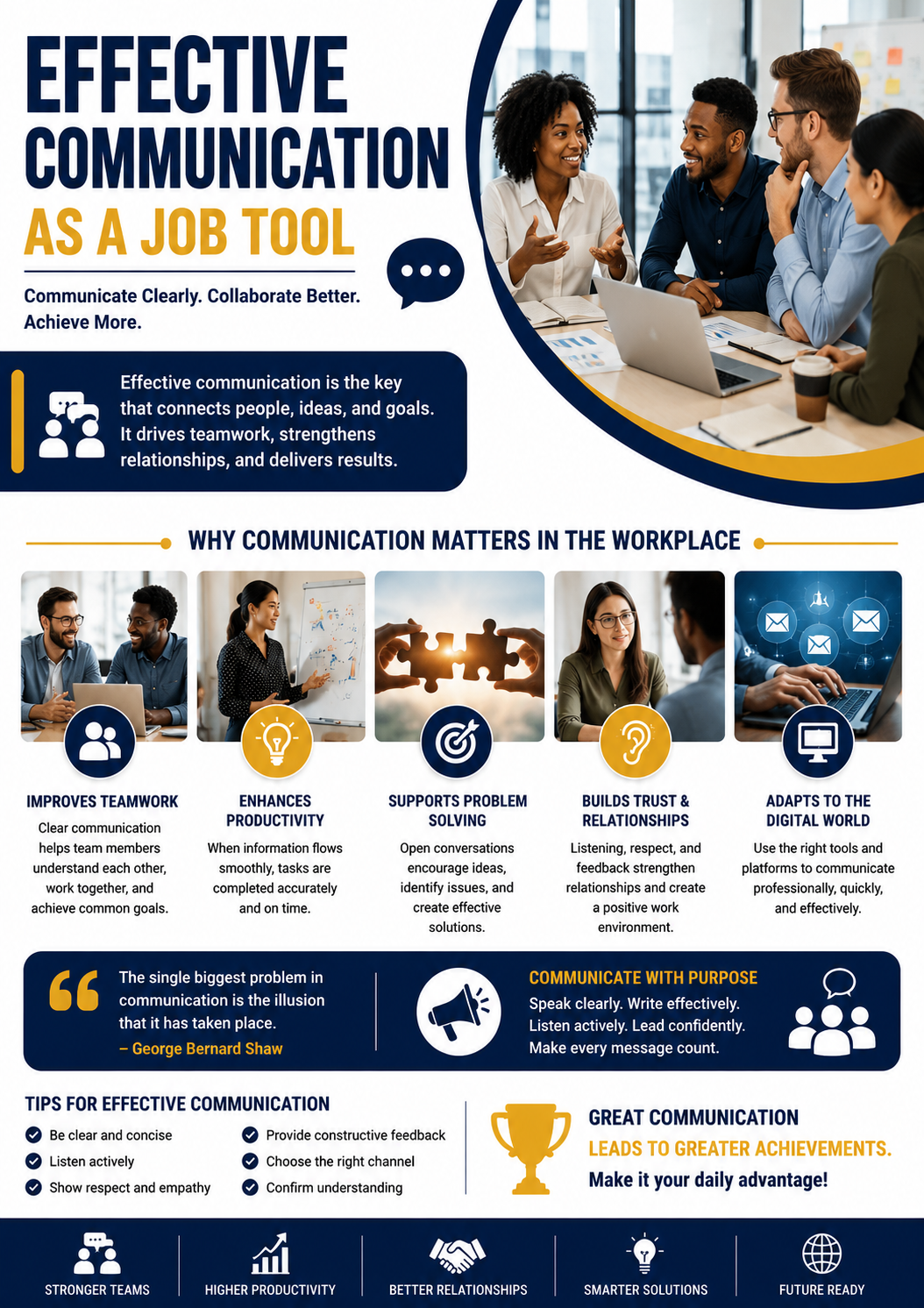
Effective Communication as a Powerful Job Tool
In every successful workplace, communication stands as the invisible force that drives progress, builds trust, and transforms ideas into meaningful results. Beyond simply exchanging information, effective communication is a professional tool that shapes collaboration, strengthens relationships, and ensures that organizational goals are achieved with precision and efficiency. It is the foundation upon which teamwork, innovation, and productivity are built.
In today’s fast-paced and digitally connected world, the ability to communicate clearly and professionally has become more important than ever. Whether through face-to-face discussions, written reports, virtual meetings, or digital platforms, communication influences how tasks are understood, decisions are made, and challenges are resolved. Professionals who master this skill not only enhance workplace performance but also position themselves for leadership and long-term career success.
Effective communication is therefore not just a workplace requirement; it is a strategic asset that empowers individuals and organizations to thrive in an increasingly competitive environment.
The Foundation of Workplace Success
Effective communication is one of the most valuable tools in any professional environment. It is the process of exchanging ideas, information, and feedback clearly and professionally to achieve organizational goals. In every workplace, communication serves as the bridge that connects employees, management, clients, and stakeholders. Without effective communication, even the most skilled professionals may struggle to perform efficiently.
Building Stronger Teams Through Clear Interaction
Communication strengthens teamwork by ensuring that every employee understands their responsibilities and expectations. When information flows smoothly, collaboration becomes easier, and misunderstandings are reduced. Team members can share ideas openly, ask questions confidently, and work together toward common objectives. This creates a productive and supportive work environment where trust and cooperation thrive.
Enhancing Productivity and Performance
A workplace with effective communication experiences higher productivity. Clear instructions reduce confusion and allow tasks to be completed accurately and on time. Employees who understand project goals and expectations are more likely to perform efficiently. Communication also allows managers to provide guidance, monitor progress, and make necessary adjustments that improve overall performance.
Driving Problem-Solving and Innovation
Open communication encourages the exchange of ideas and creative thinking. Employees feel more confident sharing suggestions, identifying challenges, and proposing practical solutions. This process promotes innovation and allows organizations to adapt quickly to changing demands. Effective communication transforms workplace challenges into opportunities for growth and improvement.
Strengthening Professional Relationships
Respectful and purposeful communication builds trust among colleagues and clients. Active listening, constructive feedback, and empathy create positive interactions that strengthen workplace relationships. Professionals who communicate effectively are often seen as dependable, competent, and confident leaders.
Thriving in the Digital Communication Era
Modern workplaces rely heavily on digital communication tools such as emails, virtual meetings, messaging platforms, and reports. Mastering these channels ensures messages are delivered professionally and efficiently. Clear digital communication improves workflow and supports smooth organizational operations.
The Key to Career Advancement
Effective communication is more than just speaking or writing; it is a strategic job tool for professional growth. Individuals who communicate with clarity, confidence, and purpose are better positioned for leadership opportunities and long-term career success. Communication remains the foundation of workplace excellence and achievement.
In today’s competitive professional world, effective communication is not merely a skill but a strategic tool for success. It drives collaboration, strengthens workplace relationships, enhances productivity, and creates opportunities for innovation and growth. Professionals who communicate with clarity, confidence, and purpose position themselves as valuable assets within any organization. As workplaces continue to evolve in a digital and fast-paced era, mastering effective communication remains essential for career advancement, leadership development, and achieving lasting professional excellence.
Hilaria
Thank you for the insights, I would love to read many more articles like this one especially from youths like you